


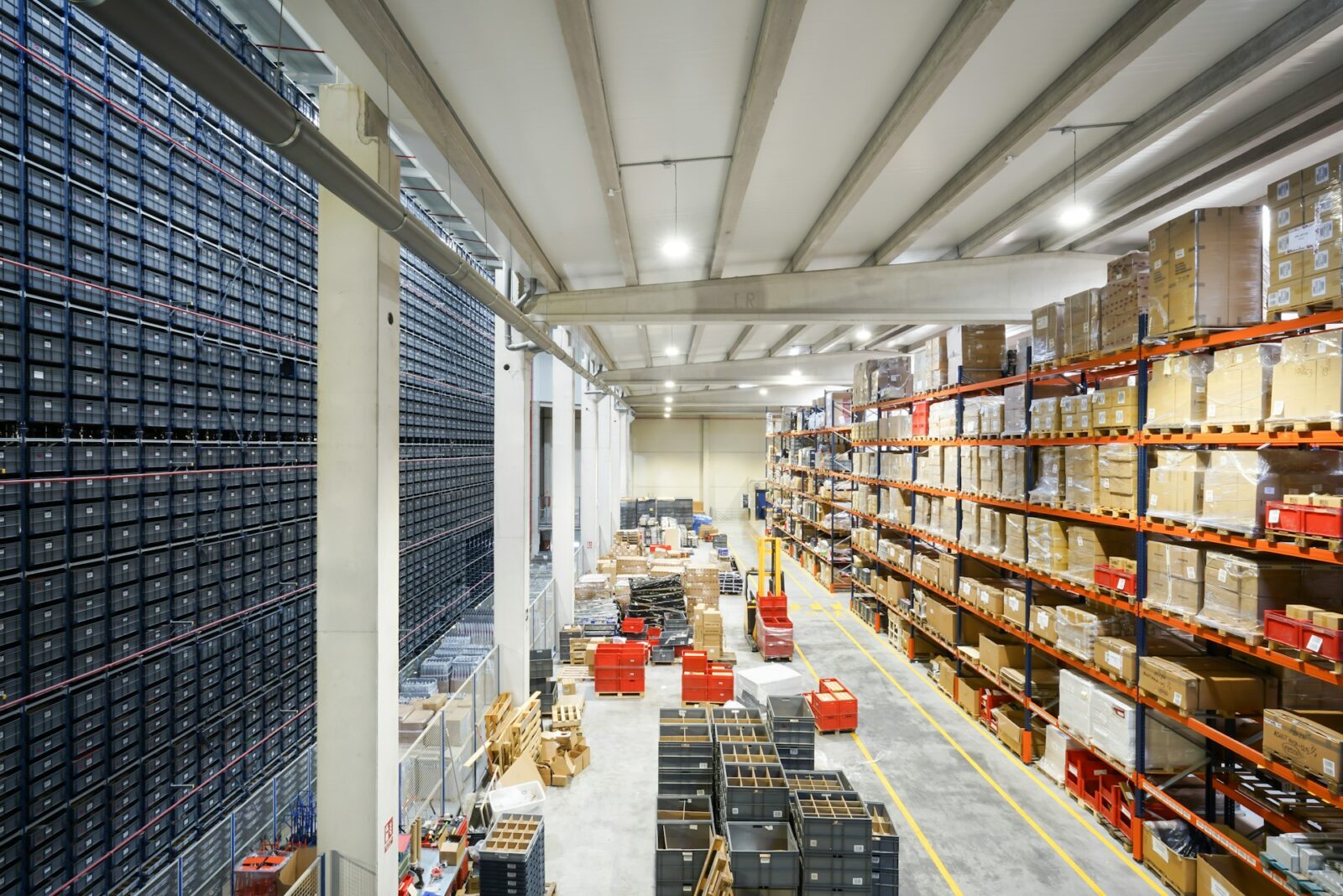
For moving and storage companies, the warehouse is often where profit quietly disappears. A shipment gets shelved in the wrong bay, a truck arrives at the dock with no space prepared, or a customer’s monthly storage fee slips through the cracks because nobody flagged it on the invoice.
None of these problems show up as a single dramatic failure. Instead, they chip away at revenue and customer trust one small oversight at a time.
The good news is that these issues are almost entirely preventable. With the right systems and habits in place, a warehouse can shift from a source of hidden losses to one of the most profitable parts of the business.
Achieving that shift starts with warehouse optimization — the ongoing process of organizing space, tracking inventory, and connecting storage operations to billing so nothing falls through the cracks.
This post walks through six practical areas moving companies should focus on to get more value out of their storage facilities, reduce errors, and protect revenue that might otherwise go unbilled.
1. Build a Foundation With Accurate Inventory Management
Every effective warehouse strategy starts with knowing exactly what’s inside the building. Without a reliable system for inventory management, even a well-organized warehouse can quickly become disorganized as shipments move in and out.
Strong inventory practices typically include:
- Standardized labeling for every shipment, crate, or pallet as it enters the facility
- Real-time updates whenever an item is received, relocated, or released
- Regular audits to confirm that physical inventory matches system records
When inventory data is accurate and current, staff can locate any shipment in seconds rather than spending hours searching bay by bay. This alone can eliminate one of the most common — and most costly — warehouse headaches.
Why Manual Tracking Falls Short
Spreadsheets and paper logs might work for a small operation, but they break down quickly as volume grows. Manual systems are prone to data entry errors, lack real-time visibility, and often exist separately from the rest of the business.
That disconnect makes it easy for shipments to get lost in the shuffle, especially during peak moving season when multiple crews are handling dozens of jobs at once.
2. Maximize Space With Smarter Storage Solutions
Storage space is a finite and valuable resource. Every square foot that sits empty or is used inefficiently represents revenue the business isn’t capturing. That’s why forward-thinking moving companies are rethinking their approach to storage solutions.
Consider these strategies for getting more out of existing warehouse space:
- Zoning by shipment type or duration (short-term versus long-term storage) to keep similar items together
- Vertical storage to make use of overhead space rather than only floor area
- Dynamic slotting, which adjusts storage locations based on current demand rather than fixed assignments
Balancing Short-Term and Long-Term Storage Needs
Moving companies typically handle two very different types of storage: storage-in-transit (SIT) for shipments awaiting delivery, and long-term storage for customers who need extended space. Each comes with its own billing cycle and handling requirements.
Treating them as a single undifferentiated pool of inventory makes it harder to track how long an item has been stored and whether it’s being billed correctly.
3. Gain Real-Time Visibility Into Warehouse Capacity
One of the most common warehouse blind spots is capacity. Without a clear, real-time view of how much space is available, it’s difficult to know whether the business can take on a new job or whether an incoming shipment will have anywhere to go once it arrives.
Real-time visibility allows warehouse managers to:
- See exactly how much space is available before committing to new storage jobs
- Identify incoming shipments and delays before they create bottlenecks at the dock
- Track the precise location of every item currently in storage
This kind of insight replaces guesswork with confidence, and it prevents the scramble that happens when a truck shows up unannounced with no space ready to receive it.
4. Connect the Warehouse to the Rest of the Business
A warehouse that operates in isolation — disconnected from sales, dispatch, and accounting — creates friction at every handoff. When a customer calls to check on their shipment, staff shouldn’t need to check three different systems to find an answer.
Connecting warehouse operations to the broader business means:
- Sales and customer service teams can see storage status without contacting the warehouse directly
- Dispatch has visibility into what’s arriving and departing, reducing scheduling conflicts
- One shared record follows the shipment from the initial customer call through to final invoicing
This kind of integration eliminates duplicate data entry and ensures that everyone working on a customer’s move — from the salesperson to the warehouse crew to the billing team — is working from the same up-to-date information.
5. Prevent Revenue Leakage Through Better Billing Practices
Storage fees are a meaningful revenue stream for moving companies, but they’re also easy to lose track of. When storage isn’t directly tied to the customer’s move record, it’s common for charges to be missed, delayed, or calculated incorrectly.
To protect this revenue, companies should:
- Tie storage billing directly to the shipment record so charges accrue automatically
- Set clear triggers for when short-term storage converts to long-term billing
- Review outstanding storage accounts regularly to catch anything that may have been overlooked
When storage billing runs on autopilot and stays connected to the customer’s account, revenue keeps accruing without anyone needing to manually track it down.
6. Streamline the Process From Dock to Invoice
Ultimately, warehouse optimization comes down to creating a smooth, repeatable process that takes a shipment from arrival to final billing with minimal friction. A simplified four-step approach can help:
- Track — Monitor real-time capacity and know exactly where every shipment sits.
- Alert — Get notified about incoming shipments and any potential delays.
- Move — Receive and release shipments efficiently, with accurate records at every step.
- Bill — Keep storage charges tied to the customer’s record so nothing goes unaccounted for.
Following this kind of structured workflow reduces the chance of error at every stage and gives warehouse teams a clear, repeatable process to follow regardless of shipment volume.
Making Warehouse Optimization a Priority
A moving company’s warehouse holds more potential than many businesses realize. Every shipment tracked accurately, every square foot used efficiently, and every storage fee billed correctly adds directly to the bottom line.
The alternative — misplaced shipments, wasted space, and missed charges — quietly erodes profitability in ways that are hard to notice until they’ve already added up.
The companies that treat their warehouse as a strategic asset, rather than an afterthought, are the ones best positioned to grow their storage revenue while keeping customers satisfied.
Investing in the right processes and tools for tracking, managing, and billing storage pays off in fewer errors, faster operations, and a warehouse that works for the business instead of against it.
To see how real-time tracking, alerts, and connected billing can work together in a single system, learn more about the warehouse management tools available for moving and storage companies.